You have two subscription options:
1. RSS Feeds!
Go to this link, or click on the RSS button at the bottom of the sidebar, and add the page to your bookmarks. Whenever I write a new post, you will be notified through that feed. This type of subscription service is more reliable.
For more information on RSS Feeds, check your included browser settings.
2. Newsletters!
Just enter your e-mail into the box below and new posts will be sent right to your address!
August 09, 2006


August 08, 2006
E3 Discussion
Earlier this week, I had a discussion with Benjamin Moskowitz, an avid gamer and econ major at UC Berkely, about the E3 downsizing. Enjoy:
Ben: So, did you hear about the Penny Arcade event? They say PAX might fill the E3 void.
Me: Maybe; Comicon and GDC have both been getting more and more commercial each year. Not to the extent of E3, but enough. I really don't care that E3 has been downsized; gamers will still get the information whether there's an E3 or not.
Ben: I care; going is fun. There always needs to be a major gaming touchstone event. Cancelling something like E3 is like cancelling Cannes.
Me: How so?
Ben: It's just foolish. ESA and all of them are just whiny bitches.
Me: But, how is Cannes like E3?
Ben: It's not open to the public, officially, but it's a major event with major press. And when you're there, you can go and see independent as well as major film. It's a cultural touchstone.
Me: That's basicly how the new E3 will be.
Ben: No, the new E3 will be closed to smaller developers, and it won't be a cultural touchstone.
Me: I guess not.
Ben: E3 is a major event, conference, and expo. That means there's an enormous show floor with hundreds of games.
Me: No one said the conferences were going away.
Ben: And that's cool. Now it's going to be closed door meetings and the like. It's also cool that gamers know that they'll be getting a lot more gaming news than normal.
Me: The biggest titles at this E3 were shown behind closed doors. Only a specific number of the press got to check out titles like Gears of War and Army of Two. What's the point of making a $5-12 million booth if something like GoW is behind closed doors?
Ben: Trust me, if you went, you'd understand. It's going from an expo to a media festival.
Me: I'm ok with that.
Ben: That still means, once a year, you'll get more news than normal, but the event that unified gamers is dust.
Me: Soooo, we won't get news, now?
Ben: It's just foolish.
Me: It's still E3, just with a smaller audience. We'll still get news, just no booth babes. Press conferences are where we get the big news anyway.
Ben: You have to understand the difference between an "expo" and a media festival. At an expo, anyone can rent a booth and show off their game(s); with this new format it's basically big devs, inviting media, warping, less hands-on playtime, and less visceral reaction. You can't just walk up and play the game, you'll have a dude demoing it and then you report on that.
Me: Hmmmm...I'm starting to understand you now.
Ben: This is weak. Invite-only means they hold it in a hotel with small rooms where reporters come in and do write-ups about demoes. Maybe some limited playtime, but it's still weak. Devs might as well do that year round. For all intents and purposes, E3 is done.
Me: Well, than E3 will be the event for big announcements and news and such, while events like PAX could be where gamers can get impressions.
Ben: There will be another event to replace E3. Lezpig, TGS, etc. CES even. All the old ones will resurge.
Me: Do you think Spaceworld will come back?
Ben: [laughs] That would be awesome!
Me: Do you think it's plausible?
Ben: Doubt it. And you, as a Nintendo fan, shouldn't be too pleased about the cancellation of E3. A large part of it has to do with Nintendo's awesome presence. I have no doubt that Sony was pissed about its lavish, deserted booth.
Me: True.
Ben: When right next to them, the Nintendo booth (much more lo-fi) boasted a 4-hour long line. That's what it boils down to. Did you hear about the big devs unimpressed with the return on their investment? It's because their interactive entertainment business model doesn't lend itself well to this format, where can you have much more fun at the Nintendo booth while the big N is spending a fraction of what you did. So, it's EA, multimillion dollar soulles shit, Vs. indie developers and Nintendo. And they win because the new format is a lot kinder to them.
Me: Well, isn't that why they had this downsize in the first place? Sony spends millions of dollars just so Sony fanboys can stand in line for the Wii.
Ben: That's right, but that's a failure of Sony's for taking the wrong path; they have a guy on a huge trinitron talking aabout the ultimate PS3 setup that no one can afford...idiots.
Me: E3 is for announcements, it should be a benefit to all devs.
Ben: Right.
Me: Then I feel Sony and EA are justified.
It was after that that we began talking about other important matters, such as banana peels and flip flops. I didn't really think you wanted to read that. Well, you can form your own opinion on the subject; feel free to comment. Just thought this could be interesting.
Ben: So, did you hear about the Penny Arcade event? They say PAX might fill the E3 void.
Me: Maybe; Comicon and GDC have both been getting more and more commercial each year. Not to the extent of E3, but enough. I really don't care that E3 has been downsized; gamers will still get the information whether there's an E3 or not.
Ben: I care; going is fun. There always needs to be a major gaming touchstone event. Cancelling something like E3 is like cancelling Cannes.
Me: How so?
Ben: It's just foolish. ESA and all of them are just whiny bitches.
Me: But, how is Cannes like E3?
Ben: It's not open to the public, officially, but it's a major event with major press. And when you're there, you can go and see independent as well as major film. It's a cultural touchstone.
Me: That's basicly how the new E3 will be.
Ben: No, the new E3 will be closed to smaller developers, and it won't be a cultural touchstone.
Me: I guess not.
Ben: E3 is a major event, conference, and expo. That means there's an enormous show floor with hundreds of games.
Me: No one said the conferences were going away.
Ben: And that's cool. Now it's going to be closed door meetings and the like. It's also cool that gamers know that they'll be getting a lot more gaming news than normal.
Me: The biggest titles at this E3 were shown behind closed doors. Only a specific number of the press got to check out titles like Gears of War and Army of Two. What's the point of making a $5-12 million booth if something like GoW is behind closed doors?
Ben: Trust me, if you went, you'd understand. It's going from an expo to a media festival.
Me: I'm ok with that.
Ben: That still means, once a year, you'll get more news than normal, but the event that unified gamers is dust.
Me: Soooo, we won't get news, now?
Ben: It's just foolish.
Me: It's still E3, just with a smaller audience. We'll still get news, just no booth babes. Press conferences are where we get the big news anyway.
Ben: You have to understand the difference between an "expo" and a media festival. At an expo, anyone can rent a booth and show off their game(s); with this new format it's basically big devs, inviting media, warping, less hands-on playtime, and less visceral reaction. You can't just walk up and play the game, you'll have a dude demoing it and then you report on that.
Me: Hmmmm...I'm starting to understand you now.
Ben: This is weak. Invite-only means they hold it in a hotel with small rooms where reporters come in and do write-ups about demoes. Maybe some limited playtime, but it's still weak. Devs might as well do that year round. For all intents and purposes, E3 is done.
Me: Well, than E3 will be the event for big announcements and news and such, while events like PAX could be where gamers can get impressions.
Ben: There will be another event to replace E3. Lezpig, TGS, etc. CES even. All the old ones will resurge.
Me: Do you think Spaceworld will come back?
Ben: [laughs] That would be awesome!
Me: Do you think it's plausible?
Ben: Doubt it. And you, as a Nintendo fan, shouldn't be too pleased about the cancellation of E3. A large part of it has to do with Nintendo's awesome presence. I have no doubt that Sony was pissed about its lavish, deserted booth.
Me: True.
Ben: When right next to them, the Nintendo booth (much more lo-fi) boasted a 4-hour long line. That's what it boils down to. Did you hear about the big devs unimpressed with the return on their investment? It's because their interactive entertainment business model doesn't lend itself well to this format, where can you have much more fun at the Nintendo booth while the big N is spending a fraction of what you did. So, it's EA, multimillion dollar soulles shit, Vs. indie developers and Nintendo. And they win because the new format is a lot kinder to them.
Me: Well, isn't that why they had this downsize in the first place? Sony spends millions of dollars just so Sony fanboys can stand in line for the Wii.
Ben: That's right, but that's a failure of Sony's for taking the wrong path; they have a guy on a huge trinitron talking aabout the ultimate PS3 setup that no one can afford...idiots.
Me: E3 is for announcements, it should be a benefit to all devs.
Ben: Right.
Me: Then I feel Sony and EA are justified.
It was after that that we began talking about other important matters, such as banana peels and flip flops. I didn't really think you wanted to read that. Well, you can form your own opinion on the subject; feel free to comment. Just thought this could be interesting.
August 06, 2006
The Simple Son
A middle-aged man whose opinions and morals are shattered against the very principles of rising society. More and more people disagree with him, more and more walk away from him, more and more begin to hate him and his seemingly devilish ideas for the better of mankind.
However, no one can stop him from believing in what he believes in. His faith is permanent. He knows what he believes is true.
Since more and more of modern civilization begins to see the contradicting evidence that compiles on top of this man, suffocating him, the people tide with the evidence.
His faith is still permanent and tenacious. What has been presented to him is all he'll ever need. He knows what he sees is true.
The man journeys, preaching his ideas to the masses. The masses disagree with the man, damaging the soul of the man, but leaving no impairment to his faith and relentless vision.
The man is tired. And scared that his vision may not go as well as he originally hoped. But, he must persist. After-all, he knows he's right. His faith is still determined.
What if I were to tell you who this person was?
However, no one can stop him from believing in what he believes in. His faith is permanent. He knows what he believes is true.
Since more and more of modern civilization begins to see the contradicting evidence that compiles on top of this man, suffocating him, the people tide with the evidence.
His faith is still permanent and tenacious. What has been presented to him is all he'll ever need. He knows what he sees is true.
The man journeys, preaching his ideas to the masses. The masses disagree with the man, damaging the soul of the man, but leaving no impairment to his faith and relentless vision.
The man is tired. And scared that his vision may not go as well as he originally hoped. But, he must persist. After-all, he knows he's right. His faith is still determined.
What if I were to tell you who this person was?
What if I were to say this person was Jack Thompson?
Jack Thompson is the die-hard Christian, while the gamers are the growing number of aethiests. Jack knows what he sees; as do gamers. The gaming community will never be able to convert Jack Thompson. Just as an aethiest will never be able to convert a die-hard Christian. Jack has seen the evidence given by both sides, but his faith is enourmous.
I'm just going to stop worrying.
I'm just going to stop worrying.
August 05, 2006
Big Brain Academy Review
Big Brain Academy
Nintendo DS
Nintendo
E - Everyone
$20
http://www.bigbrainacademy.com/

Exit, Brain Age; enter, Big Brain Academy. Two different games, one similar concept: Rape your brain to full capacity.
While Brain Age was focused for more of the senior citizens and other elderly nongamers, Big Brain Academy shoves most of its attention on the younger, casual gamers.
Now, that doesn't mean you won't enjoy BBA. The 15 different brain-building 60 second mini-games, which quiz you on your memorization, identification, analyzation, thinking, and computing skills, are surprisingly more than enough to keep your attention for large amounts of time.
With that in mind, one may even say this is a vast improvement over the original brain game. And, I'm going to have to agree. While BA encourages around 10 min. a day, BBA requires that you keep playing until you get that A+. "No, you may not settle for less, you lazy bastard," my DS yells at me. I have no other option but to comply; it's just too much fun.
From connecting the dots to weighing animals, players have a lot of diversity here.
Yet, I still can't tell what Dr. Lobe is...I'm thinking somewhere inbetween a bean n' cheese burrito and a dong...
Throughout the game, players will notice other strangely shaped objects and people standing together in colorful areas. This art-style is obviously geared toward younger children, so if you're over the age of 8, I suggest some caution when playing in public.
Another thing I don't understand is why each screen has a different brightness setting. Perhaps it's just another way of making you smarter, but, most of the time, it's frustrating to make connections between the two screens when one is slightly darker than the other. The two-screen format also presents a few more problems when you consider that some mini-games require both screens...with that huge David Letterman gap between them.
As for sound, you'll never really notice it. Simple examining beats that fit comfortably in the vein of Jeopardy. The theme song is, however, a bit catchy if you listen to it all the way through.
All in all, BBA is a fantastically fun game that almost anyone can enjoy. There really is nothing like it. Practice and Versus modes both give players opportunities to expand the game's life even further. Although, I would have preferred it if mini-games were better tailored for the multiplayer experience, rather than having them just ported over for a few more players.
Gameplay: 8/10
Graphics: 7/10
Sound: 7/10
Features: 9/10
Replay Value: 7/10
Final Score: 76%
Related Posts:
Lumox 2 Review
Reviews Archive
Nintendo DS
Nintendo
E - Everyone
$20
http://www.bigbrainacademy.com/
Exit, Brain Age; enter, Big Brain Academy. Two different games, one similar concept: Rape your brain to full capacity.
While Brain Age was focused for more of the senior citizens and other elderly nongamers, Big Brain Academy shoves most of its attention on the younger, casual gamers.
Now, that doesn't mean you won't enjoy BBA. The 15 different brain-building 60 second mini-games, which quiz you on your memorization, identification, analyzation, thinking, and computing skills, are surprisingly more than enough to keep your attention for large amounts of time.
With that in mind, one may even say this is a vast improvement over the original brain game. And, I'm going to have to agree. While BA encourages around 10 min. a day, BBA requires that you keep playing until you get that A+. "No, you may not settle for less, you lazy bastard," my DS yells at me. I have no other option but to comply; it's just too much fun.
From connecting the dots to weighing animals, players have a lot of diversity here.
Yet, I still can't tell what Dr. Lobe is...I'm thinking somewhere inbetween a bean n' cheese burrito and a dong...
Throughout the game, players will notice other strangely shaped objects and people standing together in colorful areas. This art-style is obviously geared toward younger children, so if you're over the age of 8, I suggest some caution when playing in public.
Another thing I don't understand is why each screen has a different brightness setting. Perhaps it's just another way of making you smarter, but, most of the time, it's frustrating to make connections between the two screens when one is slightly darker than the other. The two-screen format also presents a few more problems when you consider that some mini-games require both screens...with that huge David Letterman gap between them.
As for sound, you'll never really notice it. Simple examining beats that fit comfortably in the vein of Jeopardy. The theme song is, however, a bit catchy if you listen to it all the way through.
All in all, BBA is a fantastically fun game that almost anyone can enjoy. There really is nothing like it. Practice and Versus modes both give players opportunities to expand the game's life even further. Although, I would have preferred it if mini-games were better tailored for the multiplayer experience, rather than having them just ported over for a few more players.
Gameplay: 8/10
Graphics: 7/10
Sound: 7/10
Features: 9/10
Replay Value: 7/10
Final Score: 76%
Related Posts:
Lumox 2 Review
Reviews Archive
August 03, 2006
Lumox 2 Review
Hello, HW here. I have currently joined the people over at Graphics and Video Game Central so that I can provide them with some of my writing talent. Some of my articles will be featured there as well as some reviews. The reviews that I will write for them are based off of their standards and their review system. Here is my review of Lumox 2.
Lumox 2
Mac OS X
Laser Pirate Squad
Unrated
$10
http://www.laserpirate.com/

Lumox 2 is inspired by Lumines. Any fool can gather that. And when I say inspired, I mean it. Almost everything that you do, see, or hear in the game of Lumox is taken directly from the Lumines series.
Not to say that copying such a great puzzle game is bad; the game is still deliciously fun at a value price and for a platform that doesn't get much attention as it is. Yet, copying such a game so closely is not the most professional thing to do.
Right now, you might be thinking one of two things. 1) HumanWaste is going to kill this game; nobody likes copycats...or 2) If it's like Lumines, then it must be great. Starting now, you're going to hear a little bit of both.
Lumox is fun. Very fun. The simplicity of the game is phenomenal, yet it's extremely deep. In brief, the goal of someone playing Lumox is to create same-colored 2x2 blocks so that when the music timeline passes through the rectangular shaped arena, all 2x2 blocks may be accounted for and the player can rack up tons of points. It gets more and more intense as the music starts to speed up and the timeline passes through the arena faster and faster. Bombs add another element to the action. If a bomb is caught up in a 2x2 block, every same-colored square touching that block is taken under consideration during the timeline's dutiful course.
That is the entire game. Down to the core. Its a lot of fun. However, if you've played Lumines before, Lumox is going to be a huge disappointment. For instance, one huuuuge element of Lumines was the fact that every action that you make inadvertently affects the music in the background. This seemingly small characteristic actually immerses the player in the game without the player ever realizing it. Lumox gets it half-assed by replaying the same 30 min. of music over and over again. Though catchy, Lumox is missing a lot of depth in that department. Another thing that makes me angry when it comes to the music is that whenever you reach the next level, the music just cuts off. So, if one were to really get into the "groove" per cé, your skills will ultimately ruin that cozy feeling. Oh, awesome background visuals are missing as well. Sorry guys.
Visuals look just as amazing as they do in Lumines. I love it when the next color transition is made. I'm not afraid to admit that it looks BE-UH-YOOTeeful.
Now on to features. What does Lumox have that Lumines doesn't? Nothing you say? Well, it has one thing. Usually, when you play a normal game of Lumox or Lumines, only two colors are in play. With Lumox 2, you have the option to switch to a 3 color mode that brings the challenge quotient up a bit. Just a bit.
Lumox 2's replay value is probably one of its worst characteristics. The only "value" you get is beating your high score over and over again. The fact that rounds in Lumox are incredibly short don't help the matter. While Lumines rounds can take as long as an hour. Lumox rounds can take people around 10 minutes...maybe I just suck, who knows. I just wish there was some sort of online leaderboard.
Gameplay: 8/10
Graphics: 8/10
Sound: 8/10
Features: 2/10
Replay: 5/10
Final Score: 62%
Bottom Line: After I played the demo version of Lumox 2, I was told that I should buy the full version so I could help some college students get some food on their table. If you buy Lumox 2, that's really all you're doing. PSP owners, you should feel extremely content. Everyone else, just keep downloading the demo.
Related Posts:
Big Brain Academy Review
Reviews Archive
Lumox 2
Mac OS X
Laser Pirate Squad
Unrated
$10
http://www.laserpirate.com/
Lumox 2 is inspired by Lumines. Any fool can gather that. And when I say inspired, I mean it. Almost everything that you do, see, or hear in the game of Lumox is taken directly from the Lumines series.
Not to say that copying such a great puzzle game is bad; the game is still deliciously fun at a value price and for a platform that doesn't get much attention as it is. Yet, copying such a game so closely is not the most professional thing to do.
Right now, you might be thinking one of two things. 1) HumanWaste is going to kill this game; nobody likes copycats...or 2) If it's like Lumines, then it must be great. Starting now, you're going to hear a little bit of both.
Lumox is fun. Very fun. The simplicity of the game is phenomenal, yet it's extremely deep. In brief, the goal of someone playing Lumox is to create same-colored 2x2 blocks so that when the music timeline passes through the rectangular shaped arena, all 2x2 blocks may be accounted for and the player can rack up tons of points. It gets more and more intense as the music starts to speed up and the timeline passes through the arena faster and faster. Bombs add another element to the action. If a bomb is caught up in a 2x2 block, every same-colored square touching that block is taken under consideration during the timeline's dutiful course.
That is the entire game. Down to the core. Its a lot of fun. However, if you've played Lumines before, Lumox is going to be a huge disappointment. For instance, one huuuuge element of Lumines was the fact that every action that you make inadvertently affects the music in the background. This seemingly small characteristic actually immerses the player in the game without the player ever realizing it. Lumox gets it half-assed by replaying the same 30 min. of music over and over again. Though catchy, Lumox is missing a lot of depth in that department. Another thing that makes me angry when it comes to the music is that whenever you reach the next level, the music just cuts off. So, if one were to really get into the "groove" per cé, your skills will ultimately ruin that cozy feeling. Oh, awesome background visuals are missing as well. Sorry guys.
Visuals look just as amazing as they do in Lumines. I love it when the next color transition is made. I'm not afraid to admit that it looks BE-UH-YOOTeeful.
Now on to features. What does Lumox have that Lumines doesn't? Nothing you say? Well, it has one thing. Usually, when you play a normal game of Lumox or Lumines, only two colors are in play. With Lumox 2, you have the option to switch to a 3 color mode that brings the challenge quotient up a bit. Just a bit.
Lumox 2's replay value is probably one of its worst characteristics. The only "value" you get is beating your high score over and over again. The fact that rounds in Lumox are incredibly short don't help the matter. While Lumines rounds can take as long as an hour. Lumox rounds can take people around 10 minutes...maybe I just suck, who knows. I just wish there was some sort of online leaderboard.
Gameplay: 8/10
Graphics: 8/10
Sound: 8/10
Features: 2/10
Replay: 5/10
Final Score: 62%
Bottom Line: After I played the demo version of Lumox 2, I was told that I should buy the full version so I could help some college students get some food on their table. If you buy Lumox 2, that's really all you're doing. PSP owners, you should feel extremely content. Everyone else, just keep downloading the demo.
Related Posts:
Big Brain Academy Review
Reviews Archive
August 02, 2006
Game Movie #4
In my last post, I mentioned that the field of developing a "movie to game" adaptation is always evolving, as is every other media field. So, I have decided to continue the tips that I had originally started. Every time I think of a new technique, strategy, or idea, I'll create a new post explaining the details. The same will occur when I feel an amendment to one of my previous tips seems necessary. Feel free to provide any of your ideas as well.
This time, after reading over my preceding post, I feel that I should explain more about the artwork of both the film and the game.
When making a "game to movie" adaptation, the game's artwork needs to be seriously considered so that the feel of the movie and the game are as synchronized as much as possible in terms of looks. For instance, if I were to make the Halo film, I'd obviously want the movie to look incredibly realistic. But, if I were to make the Animal Crossing movie, the game's art direction is completely different. Thus, a different approach is necessary.
Yet, sometimes the most obvious approach is not always the right one. Let's use the Animal Crossing example like above. Japanese filmmakers are currently working on the straight-to-DVD film as we speak. This movie is going to fit in the vein of several other cutesy anime films. Anime seems like a very obvious choice; both versions of the AC story are cutesy and wacky and blah blah blah, yet, I don't think that anime should be the style the filmmakers are contemporarily using.
Claymation is the best approach. Silky, smooth claymation.
Have you ever played an Animal Crossing game? The games practically look like claymation films from a gameplay perspective. To me, this method could work very well.
Well, maybe the filmmakers don't have a large enough budget for this style of animation (hint: it's coming straight to DVD). Then...maybe the film shouldn't be made in the first place.
Related Posts:
How to Make a Good Game to Movie Adaptation
This time, after reading over my preceding post, I feel that I should explain more about the artwork of both the film and the game.
When making a "game to movie" adaptation, the game's artwork needs to be seriously considered so that the feel of the movie and the game are as synchronized as much as possible in terms of looks. For instance, if I were to make the Halo film, I'd obviously want the movie to look incredibly realistic. But, if I were to make the Animal Crossing movie, the game's art direction is completely different. Thus, a different approach is necessary.
Yet, sometimes the most obvious approach is not always the right one. Let's use the Animal Crossing example like above. Japanese filmmakers are currently working on the straight-to-DVD film as we speak. This movie is going to fit in the vein of several other cutesy anime films. Anime seems like a very obvious choice; both versions of the AC story are cutesy and wacky and blah blah blah, yet, I don't think that anime should be the style the filmmakers are contemporarily using.
Claymation is the best approach. Silky, smooth claymation.
Have you ever played an Animal Crossing game? The games practically look like claymation films from a gameplay perspective. To me, this method could work very well.
Well, maybe the filmmakers don't have a large enough budget for this style of animation (hint: it's coming straight to DVD). Then...maybe the film shouldn't be made in the first place.
Related Posts:
How to Make a Good Game to Movie Adaptation
July 26, 2006
How to Make a Good Game to Movie Adaptation
I'm sure many can agree. There has never been a good game to film media adaptation that has captivated the attention of the gamer audience. Ever. There are reasons for this and there are simple solutions. But, directors such as Uwe Boll seem to refuse any of it; doing it their way and their way only.
Before I explain how this will all work, you guys need to know one thing (Directors and screenplay writers should understand it too): A game is a set of goals given to the player by the designer/programmer. Completeing these goals lets the player see the story unfold in front of them while they are participating in the action. Movies give the audience a direct view of the story. Directors and screenplay writers don't understand how to directly take the story from a video game and create a smooth transition to the big screen. What gamers end up seeing is video game fan-fiction in video form. Got it? Good. We may now begin.
1. Understand Your Source Material
If you really want to make a movie adaptation of your favorite game, you're obviously not going to play the game once. You're going to play through it tens, maybe hundreds of times. You need to take notes, you need to talk with the designers of the game, you need to read the instruction manual thousands of times, you need to study game artwork, you need to understand the story's twists and turns, you need to play through other games in the series. This step is the easiest to understand because you already knew you had to do it. But why?
Playing through the game tons of times obviously allows you to understand the game's main storyline. Taking notes is undoubtedly going to help (main plot points, character proggresion, etc. etc.). Talking with designers who worked on the game is another obvious one. These guys are the ones who are going to make sure you're keeping the story intact and the way it should be.

2. Visuals are Your Friend
Another thing you must remember when creating a project such as this is that your main audience is obviously going to be gamers. Obviously. There are two properties found in modern video games that immediately grab the attention of today's gamers: Great gameplay and amazing graphics.
Right there, you can now see the main problem that haunts previous video game to movie adaptations. There is no possible way to include great gameplay in a movie without it becoming a video game itself. Visuals are your only option. That's why filmmakers need to devote all of their attention toward providing the audience with the most beautiful images ever seen on a cinema screen. That, my friend, is the only way one can bring in that core gamer audience. And that, my friend, is where your luck ends, and production stops.
Riddle me this: How many video game based movies ever released brought in any great financial profit or have been fairly accepted by the gamers who loved the game? If your answer isn't n0, then, please, tell me to stop typing this right now. It's wasting both of our time.
Ok, great...good luck finding a generous production studio! Gamers are a hard crowd to please; if you don't have that 200 million to back your vision up, don't bother bringing that vision to the people in the first place. You're better off drawing your own graphic novel, even if it looks like this:

3. Actors and Actresses Should be Unknown
This one's really simple. Let's just say, I don't want to see Tom Cruise playing the role of Link:


If filmmakers use performers who are unknown to the viewing audience, then the majority of us gamers won't be so dissapointed by the match seen above. Besides, that leaves filmmakers with more money for fancy visual effects.
Conclusion: Well, that's all I can really think of at the moment. Of course, this type of topic evolves as new movie and/or game technology increases. For instance, if a Wii game were to be translated into a movie, new filmmaking techniques may be required.

Related Posts:
Game Movie #4
Before I explain how this will all work, you guys need to know one thing (Directors and screenplay writers should understand it too): A game is a set of goals given to the player by the designer/programmer. Completeing these goals lets the player see the story unfold in front of them while they are participating in the action. Movies give the audience a direct view of the story. Directors and screenplay writers don't understand how to directly take the story from a video game and create a smooth transition to the big screen. What gamers end up seeing is video game fan-fiction in video form. Got it? Good. We may now begin.
1. Understand Your Source Material
If you really want to make a movie adaptation of your favorite game, you're obviously not going to play the game once. You're going to play through it tens, maybe hundreds of times. You need to take notes, you need to talk with the designers of the game, you need to read the instruction manual thousands of times, you need to study game artwork, you need to understand the story's twists and turns, you need to play through other games in the series. This step is the easiest to understand because you already knew you had to do it. But why?
Playing through the game tons of times obviously allows you to understand the game's main storyline. Taking notes is undoubtedly going to help (main plot points, character proggresion, etc. etc.). Talking with designers who worked on the game is another obvious one. These guys are the ones who are going to make sure you're keeping the story intact and the way it should be.

Gamers wouldn't want Sora to be a girl, would they? The original development team will make sure you don't make that mistake.
2. Visuals are Your Friend
Another thing you must remember when creating a project such as this is that your main audience is obviously going to be gamers. Obviously. There are two properties found in modern video games that immediately grab the attention of today's gamers: Great gameplay and amazing graphics.
Right there, you can now see the main problem that haunts previous video game to movie adaptations. There is no possible way to include great gameplay in a movie without it becoming a video game itself. Visuals are your only option. That's why filmmakers need to devote all of their attention toward providing the audience with the most beautiful images ever seen on a cinema screen. That, my friend, is the only way one can bring in that core gamer audience. And that, my friend, is where your luck ends, and production stops.
Riddle me this: How many video game based movies ever released brought in any great financial profit or have been fairly accepted by the gamers who loved the game? If your answer isn't n0, then, please, tell me to stop typing this right now. It's wasting both of our time.
Ok, great...good luck finding a generous production studio! Gamers are a hard crowd to please; if you don't have that 200 million to back your vision up, don't bother bringing that vision to the people in the first place. You're better off drawing your own graphic novel, even if it looks like this:
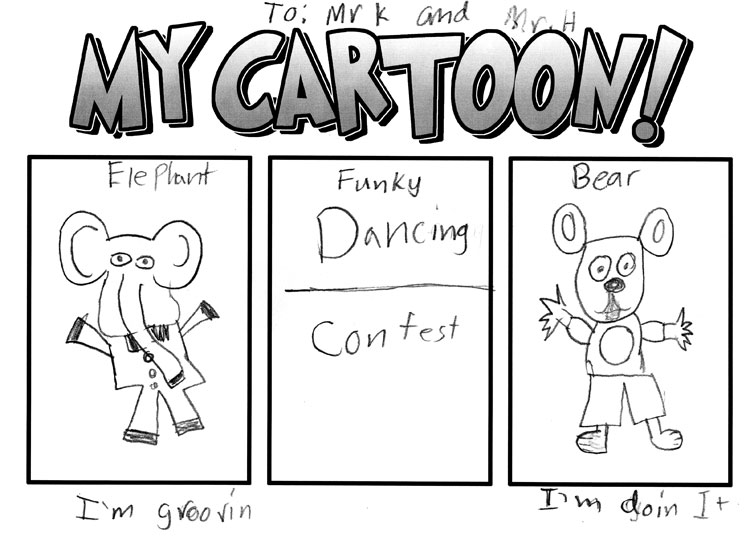
If the story is right, the writing and drawings are legible, and it's in color, people will come.
3. Actors and Actresses Should be Unknown
This one's really simple. Let's just say, I don't want to see Tom Cruise playing the role of Link:

Hmmmmmm...I guess it's not too bad.

If filmmakers use performers who are unknown to the viewing audience, then the majority of us gamers won't be so dissapointed by the match seen above. Besides, that leaves filmmakers with more money for fancy visual effects.
Conclusion: Well, that's all I can really think of at the moment. Of course, this type of topic evolves as new movie and/or game technology increases. For instance, if a Wii game were to be translated into a movie, new filmmaking techniques may be required.
Related Posts:
Game Movie #4
Subscribe to:
Posts (Atom)